Kept by the Togean.com team · verified on the ground
Diving in the Togean Islands: Sites, Seasons & Dive Resorts
The Togeans' three headline dives: Una Una's volcanic walls with schooling barracuda, the B-24 Liberator WWII wreck near Kadidiri, and barely-dived Coral Triangle reefs — plus which of the ~12 dive resorts to base at, what fun dives cost (USD 30-50), and when conditions are best.
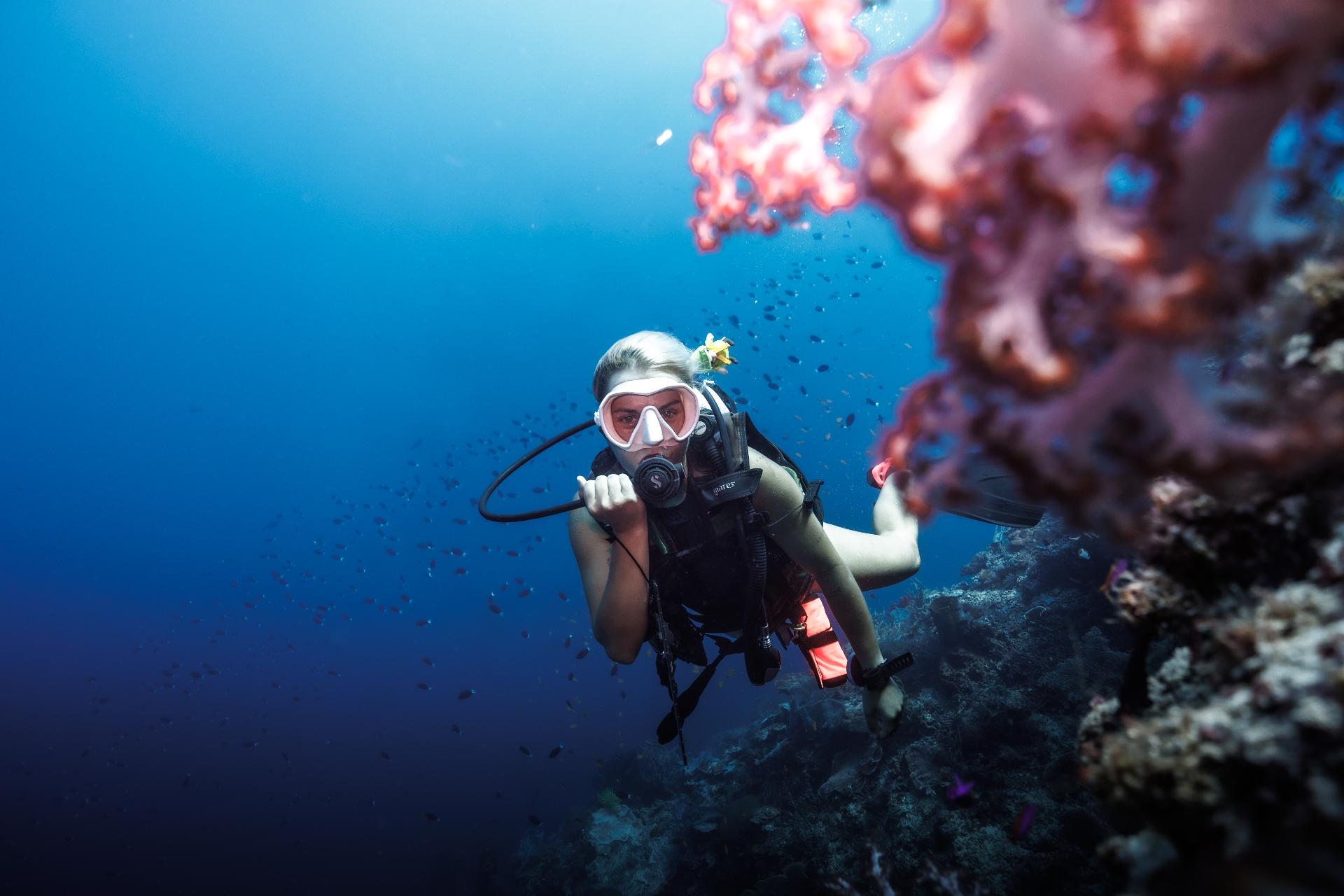
The Togean Islands (also spelled Togian Islands) sit in the Coral Triangle and deliver three things few destinations combine: an active-volcano dive area with serious schooling fish (Una Una), a genuine WWII aircraft wreck (the B-24 Liberator near Kadidiri), and mile after mile of barely-dived reef walls and house reefs. Around a dozen resorts have dive centers on-site, water sits at 27-30°C year-round, and prices are among the lowest in Indonesia for what you get.
Last verified: June 2026.
The headline areas
Una Una — the volcano
Una Una is an active volcano (Gunung Colo, whose last major eruption was in 1983 per the public volcanological record) rising from deep water north of the main chain. The nutrient-rich slopes hold the densest fish life in the Togeans: schooling barracuda, jacks, Napoleon wrasse. The signature dives are the walls and pinnacles the volcano built, where the barracuda school. Dive them from the two resorts on the island — Sanctum Una Una and Pristine Paradise — or on day trips run by some Kadidiri operators. More in our Una Una guide.
The B-24 Liberator wreck
A US B-24 Liberator bomber that came down in the sea here in World War II rests on the bottom near Kadidiri, colonized by coral and fish — one of very few diveable WWII aircraft wrecks in Indonesia. The Kadidiri-area dive centers all run it, and operators from Bomba (Araya) and Malenge (The Cliff) list it too. It is treated as a certified-diver trip; confirm depth, conditions and current site status with your dive center.
Reef walls and house reefs
Everywhere else, the diving is reef: walls and coral gardens off Bomba's atoll in the southwest, the channels and reefs around Katupat and Malenge in the east (the canyons and walls known as "Reef 5", the house reef of the relaunched New Malenge Dive Resort — very likely the former Sifa Diving Resort operation — have a strong reputation), and easy house reefs off Kadidiri's beach that make ideal night dives. Buka Buka island in the eastern group has 20+ sites of its own including a beach-accessible house reef from 5-18 m.
Jellyfish Lake
Not a dive, but the obligatory surface-interval trip: a marine lake near Katupat full of stingless jellyfish. Full guide here.
Where to base yourself
Roughly twelve properties have dive operations on-site. The shortlist by area:
| Area | Dive resorts | Notes |
|---|---|---|
| Kadidiri | Kadidiri Paradise, Black Marlin, Harmony Bay | Most central; B-24 wreck nearby; Una Una day trips |
| Una Una | Sanctum Una Una, Pristine Paradise | The big-fish diving; Sanctum is the best-reviewed operation in the islands |
| Bomba | Araya Dive Resort (ex-Bomba Divers) | Atoll sites, coral restoration program |
| Malenge | Sera Beach, The Cliff, New Malenge Dive Resort (relaunched 2025; very likely the former Malenge Dive Resort/Sifa operation — verify by WhatsApp), Bahia Tomini (dive club) | Eastern reefs |
| Buka Buka | Reconnect (SSI center) | House reef + 20 or so sites outside the park |
Both big agencies are represented: PADI courses at Kadidiri Paradise, Araya and Pristine Paradise; SSI at Reconnect, Harmony Bay and Sanctum (which also arranges PADI); Black Marlin teaches both. Fun dives in the islands typically land in the USD 30-50 / €40 range including gear, which is very competitive for Indonesia.
Conditions and seasons
- Water: 27-30°C year-round. A 3 mm suit or less is plenty.
- Visibility: varies by site and season — clearest in the calm May-September months, dropping near river mouths and after wet-season storms. Operators don't publish formal figures; ask your dive center about recent conditions.
- Currents: generally mild — one reason the Togeans are a good place to learn.
- Best months: the dry season, roughly April-November, with July-August the calmest, clearest and busiest. December-February brings wind and rain that can cancel boat days, but diving continues between blows. Full breakdown in our best time to visit guide.
Learning to dive here
Conditions are about as forgiving as Indonesia offers: warm, calm, shallow training sites off resort beaches. Most dive resorts run Discover Scuba Diving sessions and Open Water through Advanced courses (published Open Water pricing in the islands runs roughly Rp 5.4-6.9 million, about €300-400 — confirm with your chosen center). Minimum diving ages and course schedules vary by resort, so write ahead — courses need a couple of free days.
Conservation
Most of the archipelago lies within Togean Islands National Park, administered by the Balai Taman Nasional Kepulauan Togean (official park-authority page at the Ministry of Forestry's conservation directorate). Practicalities: park fees apply on trips inside the park (your resort handles them), spearfishing and collecting are out, and the dive centers here are small operations that take reef care seriously — coral restoration at Araya, Green Fins membership at others. The nearest decompression chamber is in Palu, a long way away: dive conservatively, and carry insurance that covers evacuation.
FAQ
Is diving in the Togean Islands good for beginners?
Yes — warm water, mild currents and shallow house reefs make it one of Indonesia's friendlier places to learn, and courses cost less than in Bali or Komodo. Una Una's deeper, fishier sites give you somewhere to grow into by the end of the trip.
What is the most famous dive site in the Togean Islands?
Two contenders: the B-24 Liberator WWII bomber wreck near Kadidiri, and Una Una's volcanic walls with their schooling barracuda and jacks. Most divers structure a trip to hit both.
How much does diving cost in the Togean Islands?
Roughly USD 30-50 (or ~€40) per fun dive including equipment, with multi-dive packages cheaper. Open Water courses run roughly Rp 5.4-6.9 million (about €300-400) at the resorts that publish prices.
When is the best diving season?
April to November, with July-August the most reliable seas and visibility. Diving continues in the rainy season, but December-January wind can cost you boat days.
Are there sharks and big fish?
Una Una is the big-fish area: schooling barracuda, trevally and Napoleon wrasse are the draw. Reef sharks appear around the walls. This is biodiversity-and-schools diving rather than pelagic-circus diving — set expectations accordingly and you will leave very happy.